
Cataract Surgery in Singapore: Costs, Procedures, and What to Expect
As we age, it’s natural for our eyesight to change. Once effortless tasks, like reading or driving at night, may become more challenging. It’s perfectly normal to feel uncertain or even anxious when facing these issues and considering cataract surgery, especially with questions about the costs and process.
The good news is that cataract surgery is a reliable and well-established procedure in Singapore. At Asia Pacific Eye Centre, we’re here to listen to your concerns, tailor your treatment to your needs, and support you every step of the way towards clearer vision. Read on to discover what you can expect from cataract surgery in Singapore.
Do I Have Cataracts?
Cataracts develop when the normally clear lens of your eye becomes cloudy, making it harder for light to pass through. Over time, this can cause blurry or hazy vision, increased sensitivity to glare, and difficulty seeing clearly at night, especially when driving.
While cataracts can feel worrying at first, the good news is that they develop gradually and can be effectively treated when they start to interfere with your daily life.


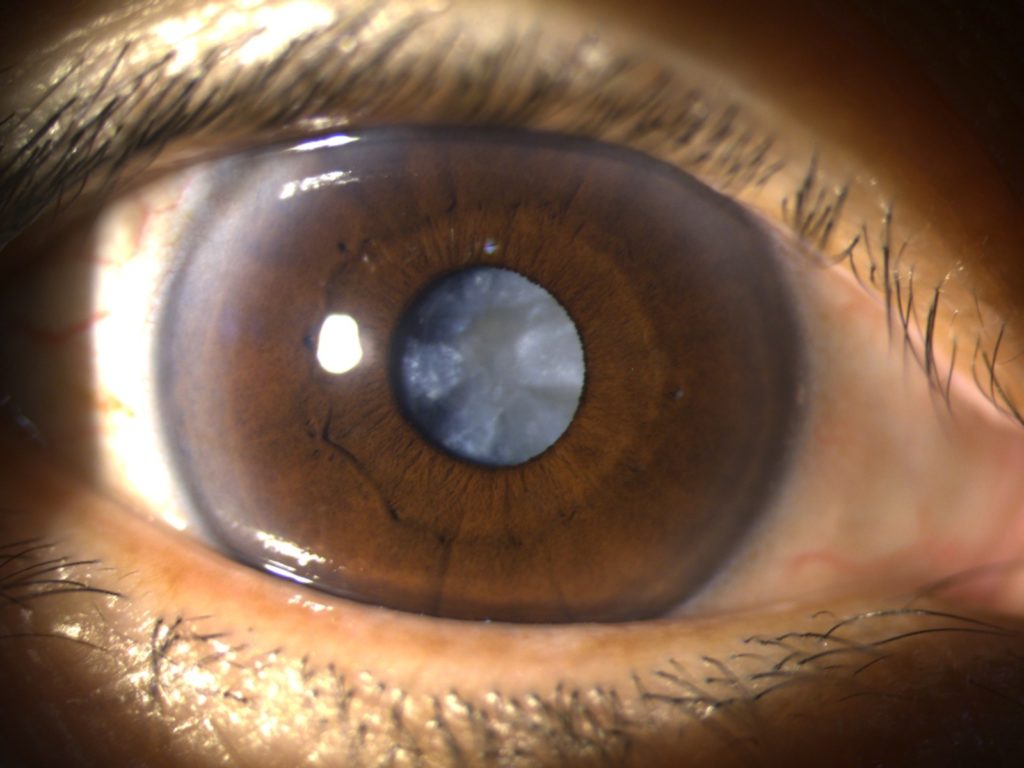
Experiencing any of these symptoms? Book a consultation with us for a professional assessment and to learn more about cataracts.
What is Cataract Surgery?
Cataract surgery is a straightforward procedure where the cloudy lens is removed and replaced with a clear intraocular lens (IOL). This helps restore clearer vision and treat common symptoms associated with cataracts.
Is There Any Way To Prevent Cataracts? Are There Any Other Treatments?
While cataracts are a natural part of ageing and cannot be completely prevented, there are steps you can take to slow their progression. Protecting your eyes from excessive sunlight by wearing sunglasses, maintaining a healthy diet rich in antioxidants, managing medical conditions like diabetes, and avoiding smoking can all help reduce risk.
Early-stage cataracts may be managed with stronger eyeglasses, improved lighting, or magnifying lenses to temporarily improve vision. However, when cataracts begin to significantly affect your daily activities, cataract surgery is the most effective treatment to restore clear vision.
When Should I Have Cataract Surgery?
As cataracts develop, your vision gradually deteriorates. Cataract surgery is advised when this decline begins to affect everyday activities, such as reading, writing, or driving.
It’s important not to delay surgery for too long. When cataracts reach the hypermature stage, they harden, making removal more challenging and increasing the risks associated with the procedure.
How Much is the Cost of Cataract Surgery in Singapore?
The cost of cataract surgery in Singapore depends on several factors, including the type of hospital, the choice of intraocular lens (IOL), and the surgical technique. At APEC, our team will provide a detailed cost estimate during your consultation, based on your individual needs and treatment plan.
The type of IOL also affects pricing. Standard monofocal lenses are more affordable, while multifocal or toric lenses that correct astigmatism are more expensive. Surgical techniques like laser-assisted cataract surgery may add to the cost, and fees vary based on the surgeon’s experience.
In terms of subsidies, Singapore citizens and PRs can use MediSave to claim up to S$2,450 per eye, and some private insurance plans provide partial coverage.
Cataract Surgery with Phacoemulsification
Phacoemulsification is a minimally invasive procedure that uses ultrasound energy to break up (emulsify) the cloudy lens inside the eye through a tiny incision. This small cut heals quickly, often without stitches, resulting in less discomfort and faster recovery. Most patients regain good vision within days and the procedure is generally successful.
Here’s how it works:
- Tiny incision – A small cut is made on the cornea.
- Ultrasound probe insertion – A special instrument with an ultrasonic tip is inserted.
- Cataract emulsification – The ultrasonic vibrations break the cloudy lens into tiny fragments.
- Aspiration – These fragments are gently suctioned out.
- IOL implantation – A clear artificial intraocular lens (IOL) is placed to restore vision.
- Self-sealing incision – No stitches are usually required.
Intraocular Lens (IOL) Implants
An intraocular lens (IOL) is an artificial lens implanted in the eye to replace the cloudy natural lens removed during cataract surgery. It restores clear vision and can be customised to reduce dependence on glasses or contact lenses.
Here’s how it works:
- Cataract Removal – The cloudy natural lens is carefully removed.
- Lens Selection – Based on your eye measurements and lifestyle needs, a suitable IOL is chosen.
- IOL Implantation – The foldable IOL is inserted through a tiny incision and positioned securely within the eye.
- Adjustment and Recovery – The IOL unfolds naturally and adjusts to your eye. Vision gradually clears as the eye heals over the next few days to weeks.
Types of IOLs:
- Monofocal IOLs – Provide clear vision at one fixed distance (near or far); glasses may still be needed for other ranges.
- Multifocal IOLs – Offer clear vision at multiple distances, reducing dependence on glasses for near and far tasks.
- Trifocal IOLs – Cover near, intermediate, and far distances for a more seamless visual range.
- Toric IOLs – Designed to correct astigmatism while improving overall vision.
Cataract Screening
Not sure if you have cataracts? Then an eye screening might be what you need for timely treatment and to prevent vision deterioration.
Screening typically involves:
– Comprehensive eye examination: To check for lens clouding and overall eye health.
– Visual acuity tests: To assess how clearly you see at various distances.
– Slit-lamp examination: Allows the doctor to examine the front and back of the eye in detail.
– Pupil dilation: Provides a better view of the lens and retina to identify any early cataract formation.
Regular cataract screening is especially important for:
- Adults over 50
- People with diabetes or other eye conditions
- Anyone experiencing blurred vision, glare, or difficulty seeing at night
Glaucoma Screening & Testing
Cataract/Glaucoma/Age-Related Macular Degeneration Screening
- Visual Acuity/Auto-Refraction
- Eye Pressure Check (Tonometry)
- Corneal Thickness Measurement
- Optic Nerve & Macular Scan/Optical Coherence Tomography (Nerve & Macular)
- Optic Nerve & Retinal Photography
- Doctor’s Consult
What to Expect Before, During, and After Surgery
Every cataract surgery is unique, as the approach and techniques may vary depending on your eye condition and the type of procedure chosen. However, in general, here’s what you can expect:
- Before Surgery
- During Surgery
- After Surgery
- Comprehensive eye examination to assess your eye health and confirm the severity of the cataract.
- Key measurements such as corneal curvature and eye length will be taken to determine the appropriate intraocular lens (IOL) for you.
- Your medical history will be reviewed to ensure the procedure is safe, especially if you have conditions like diabetes or hypertension.
- Pre-operative instructions will be provided, including when to stop certain medications, using prescribed eye drops, and fasting requirements if needed.
- Local anaesthesia (eye drops or a small injection) is used to numb the eye.
- The cloudy lens is broken up using ultrasound (phacoemulsification) or removed as a whole, depending on the technique.
- A clear intraocular lens (IOL) is inserted to restore vision.
- Expect some temporary blurriness as your eye adjusts.
- Use prescribed eye drops to prevent infection and reduce inflammation.
- Avoid rubbing your eye, heavy lifting, or intense exercise for at least a week.
- Attend your scheduled follow-up visits, typically within 24–48 hours and as advised by your eye specialist.
What Causes Vision To Be Cloudy Again After Cataract Surgery?
Sometimes, patients notice their vision becoming cloudy again after initially successful cataract surgery. This is often due to a condition called posterior capsule opacification (PCO), also known as an “after-cataract” or “secondary cataract.”
PCO occurs when residual lens epithelial cells migrate or change, leading to clouding of the lens capsule that holds the intraocular lens (IOL). As a result:
- Vision may appear hazy or blurry.
- Bright lights and glare can feel more intense.
- Reading or night driving may become difficult.
The good news is that PCO is easily treatable with a quick, 15-minute YAG laser procedure, restoring clear vision without the need for another major surgery.
Our Cataract Surgery Specialists

Dr. Lee Hung Ming
Senior Consultant & Eye Surgeon
MBBS (Singapore), M.Med (Ophth)
FRCS (Edinburgh), FAMS (Ophth)
A highly-respected eye specialist in Singapore with 20+ years of experience, Dr. Lee has performed 20,000+ cataract and LASIK procedures. He received the ACE Award for surgical training excellence in the Asia-Pacific region.

Dr. Tan Yar Li
Senior Consultant & Eye Surgeon
MBBS (Singapore), M.Med (Ophth)
MRCSEd (Ophth), FAMS (Ophth)
Dr. Tan was one of the first few eye surgeons in Singapore to perform Minimally Invasive Glaucoma Surgery. She’s a fellowship-trained ophthalmologist with extensive experience in glaucoma, cataract, and refractive surgery.

Dr. Wong Chee Wai
Senior Consultant & Eye Surgeon
MBBS (Singapore), M.Med (OPHTH), FAMS (Ophth)
MCI (Singapore), PHD (UTRECHT)
Dr. Wong is a fellowship-trained retinal specialist in Singapore who founded the Surgical Retina Service at Sengkang Hospital. He’s a respected clinician and researcher with over 60 publications and a PhD in ocular drug delivery.

Dr. Gillian Teh
Senior Consultant & Eye Surgeon
Sub-specialties: Oculoplastic, Cataract and Comprehensive Ophthalmology
MBBS (London), MMed (Ophth), FAMS
Dr. Teh is a fellowship-trained oculoplastic specialist in Singapore with expertise in eyelid, cataract, and comprehensive eye surgery. A former consultant at SNEC and clinical tutor at NUS, she combines surgical precision with a strong commitment to patient care and medical education.
Frequently Asked Questions (FAQs)
Cataract surgery is required when vision becomes significantly impaired, affecting daily activities like reading, driving, or recognising faces.
While cataract surgery is generally safe, potential risks include infection or inflammation. Benefits include improved vision, enhanced quality of life, and reduced dependency on glasses.
Most patients experience clear vision within a few days, with full recovery taking about four to six weeks.
Yes, many insurance plans and Medisave subsidies cover cataract surgery.
Cataract surgery is generally painless. Local anaesthesia is used to numb the eye, and patients often report only slight pressure or mild discomfort during the procedure. Most people are comfortable throughout and may only need minimal sedation.
It is usually recommended to operate on one eye at a time to reduce the risk of complications and allow proper healing. The second eye can be scheduled shortly after the first, typically within a few weeks, once your recovery is progressing well.
Waiting times depend on the type of surgery and the availability of appointments. For most patients, surgery can usually be scheduled within a few weeks, but this may vary depending on your eye condition and the type of lens chosen. Our team will work with you to find a convenient date.
Book a Consultation
Get an eye checkup with us now!
Interested to fix a consult with our eye specialist? Get in touch with us!