Summary:
- Black spots in your vision are often caused by eye floaters, which develop as the vitreous gel inside your eye changes with age.
- These are usually harmless but can sometimes be a sign of a retinal tear or retinal detachment.
- If you notice a sudden increase in floaters, flashes of light, or a shadow across your vision, you should seek prompt eye assessment.
Seeing a black spot, speck, thread, or shadow drifting across your vision can be unsettling. You may wonder whether it is simply an eye floater or a sign of a more serious eye condition.
While many black spots are caused by harmless age-related changes, some can indicate problems that require prompt assessment. Understanding what these symptoms mean and knowing when to see an eye specialist can help you protect your vision.
What Are Eye Floaters?
Eye floaters are one of the most common reasons people notice black spots in their vision.
Why Floaters Develop
The centre of the eye contains a gel-like substance called the vitreous. As you age, the vitreous gradually changes in consistency and becomes more liquid.
Small clumps or strands can form within the vitreous and cast shadows onto the retina, creating the appearance of floaters.
Common Causes Of Eye Floaters
Floaters may develop due to:
- Age-related vitreous changes
- Nearsightedness (myopia)
- Previous eye surgery
- Eye inflammation
- Eye injury
- Bleeding inside the eye
When Floaters Are Considered Normal
Many floaters are part of the natural ageing process and do not threaten vision. They may become less noticeable over time as the brain gradually adapts to them.
However, new or sudden eye floaters should still be evaluated, particularly if they are accompanied by other symptoms.
What Does A Sudden Appearance Of Floaters Mean?
A sudden onset of floaters is concerning because it can be linked to changes in the retina.
Why New Floaters Can Occur Suddenly
The vitreous can change rapidly rather than gradually. When this happens, you may suddenly notice multiple floaters that were not present before.
Some people describe this as a sudden shower of black dots, spots, or cobwebs.
Posterior Vitreous Detachment And Floaters
One common cause is posterior vitreous detachment (PVD), which occurs when the vitreous separates from the retina.
PVD becomes more common with age and often causes new floaters and occasional flashes of light.
While many cases do not lead to complications, a retinal examination is important because retinal tears can sometimes occur during this process.
When Floaters May Be Linked To A Retinal Tear
As the vitreous pulls away from the retina, traction can occasionally create a retinal tear.
A retinal tear allows fluid to pass underneath the retina and may progress to retinal detachment if not identified and treated.
Signs That Should Not Be Ignored
Seek prompt assessment if you experience:
- A sudden increase in floaters
- Repeated flashes of light
- A dark shadow in your peripheral vision
- A curtain-like effect across part of your vision
- Sudden vision loss
How Do Different Visual Symptoms Compare?
Different symptoms may point to different underlying conditions.
| Symptom | Common Description | Assessment Recommended? |
| Eye Floaters | Moving dots, strands, or cobwebs | Yes, especially if new |
| Flashes Of Light | Brief flashes in peripheral vision | Yes |
| Black Spots In Vision | Moving or fixed dark spots | Yes |
| Shadows Or Curtain-Like Vision Loss | Dark area spreading across vision | Urgent assessment required |
Noticed new floaters or black spots in your vision? Book an eye assessment at Asia Pacific Eye Centre to check your retina and get clarity on your symptoms.
When Is A Black Spot Different From A Floater?
Not every black spot represents a floater.
How Floaters Move Across Your Vision
Floaters typically drift when you move your eyes and may appear to move away when you try to look directly at them.
They are often more noticeable against bright backgrounds such as a clear sky or a white wall.
What A Fixed Black Spot May Mean
A fixed black spot that remains in the same location can indicate a different problem affecting the retina, macula, or visual pathway.
Central Versus Peripheral Vision Changes
The location of a black spot or visual disturbance can provide important clues about its cause.
| Type Of Vision Change | What You May Notice | What It Can Affect |
| Central Vision Changes | Blurred, distorted, or dark spots in the centre of your vision | Reading, recognising faces, using digital devices, and other detailed tasks |
| Peripheral Vision Changes | Shadows, blind spots, or a narrowing of your side vision | Awareness of your surroundings, mobility, and detecting objects outside your direct line of sight |
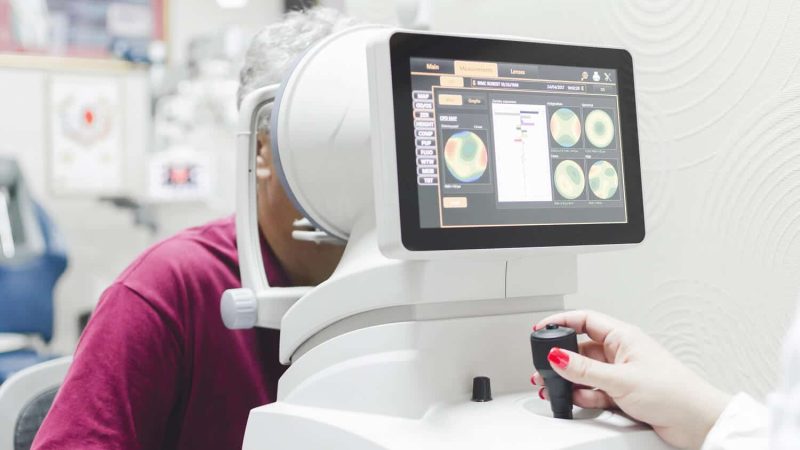
What Happens During An Eye Floater Assessment?
A thorough examination by an eye specialist helps identify the cause of your symptoms and determine whether treatment is required.
Reviewing Your Symptoms
Your eye specialist will discuss:
- When symptoms started
- Whether they appeared suddenly
- Changes in vision
- Associated flashes or shadows
- Previous eye conditions
Dilated Eye Examination
Your eye specialist will use eye drops to widen your pupils, allowing a detailed view of your retina, vitreous, and other structures at the back of the eye.
Retinal Assessment And Imaging
You may undergo retinal imaging to help document findings and provide a clearer understanding of what is causing your symptoms.
Identifying Retinal Tears Or Detachment
Your examination will focus on identifying retinal tears, retinal detachment, or other retinal conditions that may require treatment or closer monitoring.
Discussing Treatment Or Monitoring
Based on your findings, your eye specialist will explain the diagnosis and discuss whether monitoring, follow-up appointments, or treatment for eye floaters is appropriate.
Treatment For Eye Floaters: What Are Your Options?
Treatment for eye floaters depends on the cause and how much they affect your daily vision.
When Observation May Be Appropriate
Many eye floaters become less noticeable over time as the brain adapts to their presence. If your examination shows no underlying retinal problems and your symptoms are mild, your eye specialist may recommend monitoring rather than immediate treatment. Follow-up appointments allow your specialist to check that your condition remains stable.
Laser Vitreolysis
Laser vitreolysis uses a focused laser to break up floaters within the vitreous, reducing their size and making them less visible. The procedure is performed in a clinic setting and does not require general anaesthesia. It may be suitable for patients with specific types of floaters, though not all floaters respond equally well to this approach.
Vitrectomy
A vitrectomy is a surgical procedure in which the vitreous is removed and replaced with a clear solution. It is generally considered when floaters are severe, significantly affect vision, and have not responded to other management. As with any surgical procedure, it carries risks that your eye specialist will discuss with you before proceeding.
FAQs About Black Spots And Eye Floaters
What Causes A Black Dot Or Spot In My Vision?
Common causes include eye floaters, vitreous changes, retinal conditions, or bleeding inside the eye. An eye examination is needed to determine the cause.
Are Eye Floaters Dangerous?
Many floaters are harmless. However, sudden new floaters may indicate retinal problems and should be assessed promptly.
Should I Go To A&E For A Sudden Appearance Of Floaters?
Urgent medical assessment is recommended if floaters appear suddenly, particularly when accompanied by flashes, shadows, or vision loss.
Can Eye Floaters Go Away On Their Own?
Floaters often become less noticeable over time, although they may not disappear completely.
What Is The Difference Between Floaters And Flashes?
Floaters appear as moving spots or strands, while flashes appear as brief streaks or flickers of light.
At What Age Do Eye Floaters Usually Appear?
Floaters become more common from middle age onwards as the vitreous naturally changes with age.
When Should I Be Worried About Eye Floaters?
Seek prompt assessment if you experience a sudden increase in floaters, flashes of light, a shadow across your vision, or sudden vision changes.
Book An Eye Assessment At APEC
If you have noticed new floaters, black spots in your vision, flashes of light, or other sudden visual changes, an eye examination can help determine the cause and identify any conditions that may require treatment.
At Asia Pacific Eye Centre, we provide comprehensive retinal assessments for those experiencing floaters, flashes, and other vision concerns. We help identify retinal tears, retinal detachment, and other conditions that may affect vision.