
Implantable Contact Lens (ICL) Surgery in Singapore
What Are Implantable Contact Lenses (ICL)?
Implantable Contact Lenses (ICL), also known as Implantable Collamer Lenses, are medical devices used for the treatment of myopia, hyperopia & astigmatism. ICLs are phakic intraocular lenses, meaning that they work together with the natural crystalline lens in the eye.

Who Is an Ideal Candidate for ICL?
Not everyone is suitable for ICL surgery. When determining if this vision correction procedure is right for you, we will evaluate several factors through a comprehensive Pre-ICL eye assessment.
This not only rules out underlying eye conditions that could affect the outcome, but also ensures that the ICL can be tailored to your eye measurements.
Age
Ideally between 21 and 45 years old, when the eye prescription has stabilised.
Stable prescription
No significant change in glasses or contact lens power for at least one to two years.
Suitable for moderate to high myopia (short-sightedness), hyperopia (far-sightedness), or astigmatism that may not be fully treated with SMILE® Pro 2.0 or other laser vision correction.
Corneal health
Patients with thin corneas or irregular corneal shapes who may not qualify for LASIK/PRK can often consider ICL.
Eye health
General health
Absence of autoimmune or systemic diseases that could interfere with healing.
The Pre-ICL Assessment
Your Pre-ICL Assessment can be scheduled during our clinic’s operating hours, Monday to Saturday. Book an appointment here.
Preparation for Contact Lens Wearers:
Soft contact lenses
Stop wearing them for at least seven days before the assessment.
Hard contact lenses
Stop wearing them for at least two weeks before the assessment.
What Happens During the Assessment
- You will undergo a series of detailed eye tests to check if ICL surgery is suitable for you.
- If you are found to be a good candidate and wish to proceed, our team will:
- Secure a surgery date for you.
- Order customised ICL lenses based on your eye measurements.

The ICL Surgery Process at APEC
ICL surgery is usually scheduled in the morning, from Monday to Friday, at Gleneagles Hospital. Here’s a step-by-step overview of what happens on the day:
Check In
You’ll arrive at the Gleneagles operating theatre, where our hospital team will guide you through the process.
Get Ready
Anaesthetic eye drops are applied to keep your eyes comfortable and pain-free during the procedure.
The Procedure (20–30 minutes)
- A tiny incision is made in the cornea.
- The ICL is gently placed between your iris and natural lens.
- The incision heals naturally on its own, so no stitches are required.
After Surgery
You may feel a little tired, so you’ll be able to rest in the day ward until you’re ready to go home.
Discharge and Follow-Up
Once you’re comfortable, you’ll be discharged with clear instructions, and a follow-up appointment will be scheduled at our clinic to check your recovery.
ICL Cost in Singapore
The cost of ICL surgery in Singapore can vary depending on several considerations, including:
Type of ICL lens (toric lenses for astigmatism may be more expensive than standard lenses).
Complexity of prescription and whether both eyes require correction.
Pre- and post-operative care, such as detailed eye assessments and follow-up visits.
Financial Aid and Insurance Support
- MediSave: ICL surgery is generally not claimable under MediSave as it is considered an elective procedure.
- Insurance: Most insurance plans do not cover elective vision correction surgery, but we recommend that you check with your provider directly. We welcome both insured and self-paying patients, and can assist with claims for personal or corporate insurance plans.
ICL vs. LASIK
| Key Differences | ICL | LASIK |
|---|---|---|
| Procedure | Involves implanting a biocompatible lens inside the eye, between the iris and the natural lens. The cornea remains largely untouched. | Uses a laser to reshape the cornea so light focuses correctly on the retina. |
| Suitability | Often recommended for those with high myopia, thin or irregular corneas, or prescriptions outside the safe range for LASIK. | Suitable for those with mild to moderate refractive errors and healthy corneal thickness. |
| Recovery and Reversibility | Reversible, as the implanted lens can be removed or replaced if needed. Recovery is usually quick. | Permanent corneal reshaping; reversal is not possible. Healing may take a few weeks. |
| Cost | Typically S$7,000–S$11,000 for both eyes in Singapore. | Generally S$3,500–S$5,000 for both eyes in Singapore, depending on the technology used. |
| Advantages | Suitable for high prescriptions, thin corneas, and patients who may not qualify for LASIK. Provides stable and sharp vision with minimal risk of dry eyes. | Widely available, lower cost, and quick recovery with long-term results. |
| Disadvantages | Higher upfront cost, requires an internal eye procedure, and may not be suitable for those with certain eye conditions. | Not reversible, may cause dry eyes or glare, and is unsuitable for patients with very high prescriptions or thin corneas. |
Choosing the Right Option
While both procedures can significantly improve vision, the right choice depends on your eye health, lifestyle, and long-term needs. A comprehensive eye screening with one of our eye specialists will help determine which treatment is most suitable for you.
Why Choose Asia Pacific Eye Centre for Your ICL Surgery in Singapore
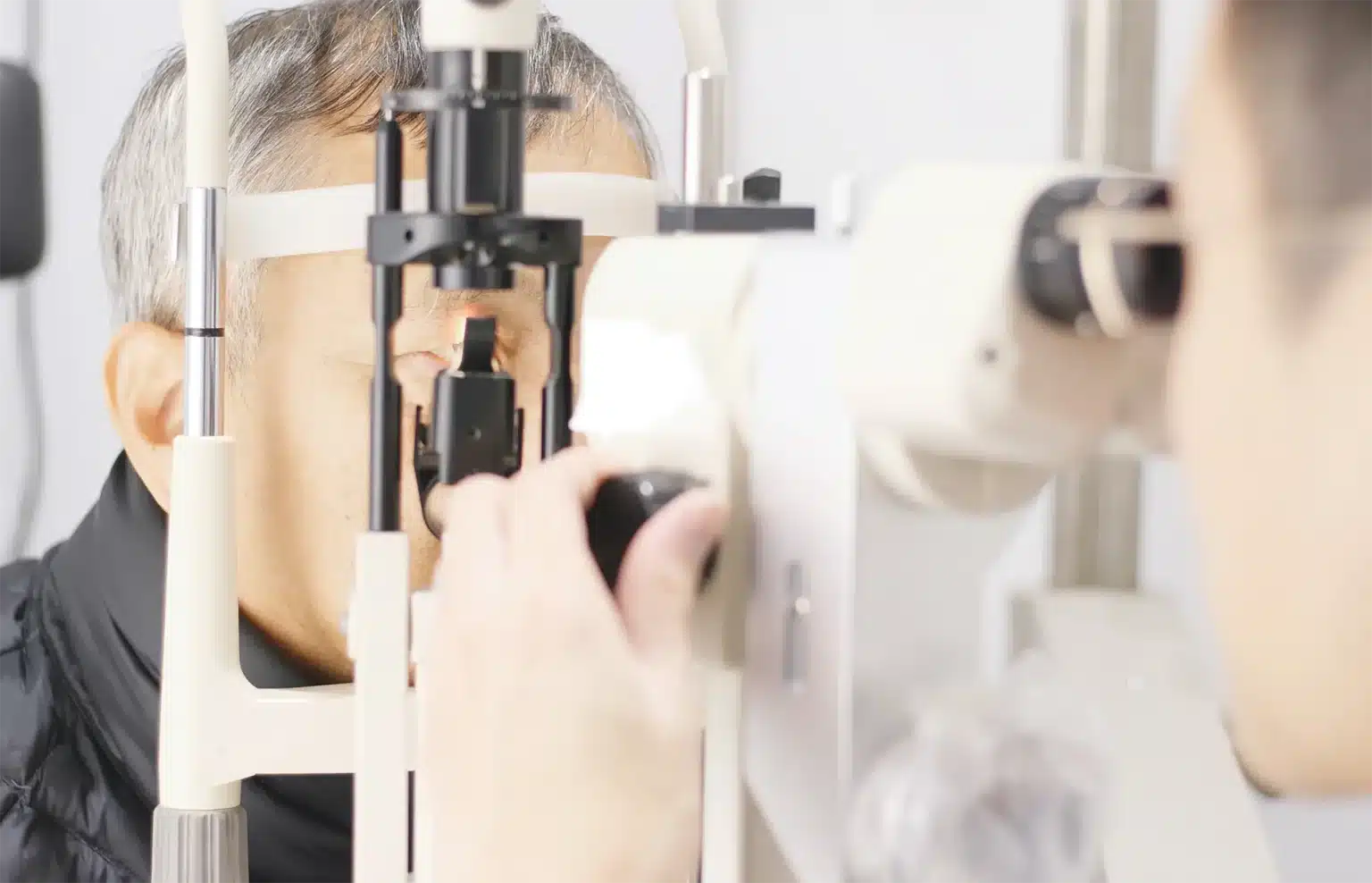
At Asia Pacific Eye Centre (APEC), all of our patients receive attentive care and tailored treatment plans for ICL surgery. We’ll guide you every step of the way, from pre-screening to follow-ups.
Accredited Specialist Centre
- APEC is an accredited eye centre in Singapore, meeting recognised standards of safety and clinical practice.
- Our ophthalmologists are qualified in a range of vision correction procedures, including ICL.
Experienced Eye Specialists
- All procedures are carried out by licensed and fellowship-trained ophthalmologists.
- We take time to assess each case carefully, ensuring that recommendations suit your eye health and lifestyle.
Support Throughout the Process
- Detailed eye assessments and measurements help ensure patient suitability for ICL.
- We will assist with appointment scheduling, financial guidance, and post-surgery care.
Our ICL Eye Specialists
Want to know more about our doctors? See their profiles below.

Dr. Lee Hung Ming
Senior Consultant & Eye Surgeon
MBBS (Singapore), M.Med (Ophth)
FRCS (Edinburgh), FAMS (Ophth)
A highly-respected eye specialist in Singapore with 20+ years of experience, Dr. Lee has performed 20,000+ cataract and LASIK procedures. He received the ACE Award for surgical training excellence in the Asia-Pacific region.

Dr. Tan Yar Li
Senior Consultant & Eye Surgeon
MBBS (Singapore), M.Med (Ophth)
MRCSEd (Ophth), FAMS (Ophth)
Dr. Tan was one of the first few eye surgeons in Singapore to perform Minimally Invasive Glaucoma Surgery. She’s a fellowship-trained ophthalmologist with extensive experience in glaucoma, cataract, and refractive surgery.
Frequently Asked Questions (FAQs)
Are ICLs safe?
ICLs have been widely used for many years and are considered safe when performed by a qualified ophthalmologist. As with any procedure, risks exist, but these are minimised with careful screening and proper aftercare.
How long do implantable contact lenses last?
ICLs are designed to remain in the eye for many years. They do not require replacement unless your prescription changes significantly or other eye conditions develop.
What are the disadvantages of ICL?
Possible drawbacks include higher cost compared to LASIK, the need for an internal eye procedure, and rare risks such as cataract formation or increased eye pressure. A pre-surgery assessment helps identify and reduce these risks.
What tests are involved in the pre-ICL assessment?
The assessment includes checks for:
- Corneal thickness and curvature
- Anterior chamber depth (space in front of the eye)
- Eye pressure and retinal health
- Pupil size and tear film stability
What are the main differences between ICL and LASIK?
ICL involves placing a lens inside the eye, while LASIK reshapes the cornea with a laser. ICL is reversible and often preferred for higher prescriptions or thin corneas, while LASIK is more common for mild to moderate refractive errors.
Can ICL correct very high prescriptions?
Yes, ICL is often recommended for patients with prescriptions too high for LASIK to treat safely. Suitability is confirmed during the pre-assessment.
How much does ICL surgery typically cost for both eyes in Singapore?
The cost ranges from $7,000- $11,000 for both eyes in Singapore, depending on the type of lens and surgical complexity.
How long does the ICL procedure take?
The surgery usually takes about 20–30 minutes per eye, and patients are typically discharged the same day.
Is ICL surgery painful?
No — anaesthetic eye drops are used to numb the eyes, so most patients feel little to no discomfort during the procedure.
Book a Consultation
Get an eye checkup with us now!
Interested to fix a consult with our eye specialist? Get in touch with us!