
Myopia (Short-Sightedness) Treatment in Singapore
What Is Myopia?
Mild, Moderate and High Myopia: What Your Degrees Mean
- Below 300 degrees: mild myopia
- 300 to 600 degrees: moderate myopia
- Above 600 degrees: high myopia
What Causes Myopia?
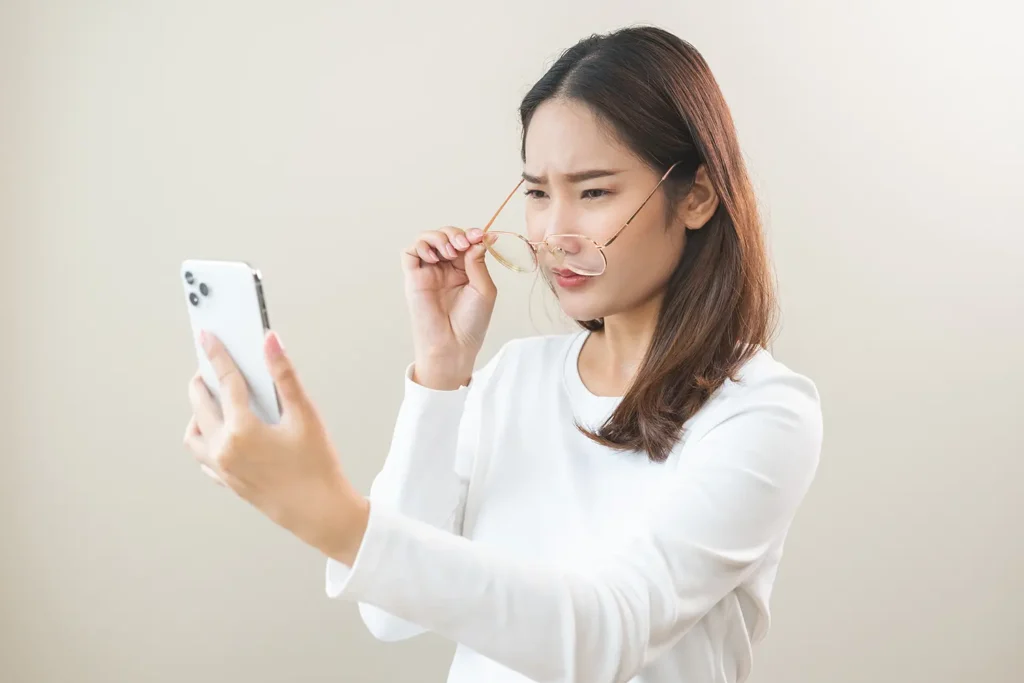
At this point, there has not been a consensus as to what causes myopia. However, certain risk factors, such as genetic predisposition, are likely to play a part. According to the Singapore National Eye Centre, the risk of developing myopia is higher if one (2 times more) or both (8 times more) parents are myopic. In addition, increasing severity of parental myopia leads to a greater risk.
Genetics and Family History
Family history is one of the strongest known risk factors for myopia. According to the Singapore National Eye Centre, the risk of developing myopia is higher if one (2 times more) or both (8 times more) parents are myopic.
Increasing severity of parental myopia leads to a greater risk. If both your parents are myopic, it is worth arranging early eye checks for your children, even before symptoms appear.
Near Work and Screen Time
If your child spends long hours reading, writing, or using tablets and smartphones, it is worth paying attention.
Sustained close-up focusing is associated with faster elongation of the eyeball in growing eyes, and studies conducted across the region have observed an acceleration in myopia onset and progression in the years following the pandemic, likely linked to increased screen time and reduced time outdoors.
Insufficient Outdoor Time
Research suggests that children who spend more time outdoors each day are less likely to develop myopia, or may develop it later and more slowly. A study of 1,249 Singapore children from the Singapore Cohort Study of Risk Factors for Myopia (SCORM) found that those who spent more time outdoors were significantly less likely to be myopic, with outdoor activity identified as an independent protective factor.
The protective mechanism is thought to involve bright natural light stimulating the release of dopamine in the retina, which slows eyeball elongation. Encouraging your child to play outside is not a substitute for clinical treatment, but it is one of the simplest things you can do to support their eye health.
What Are the Symptoms of Myopia?
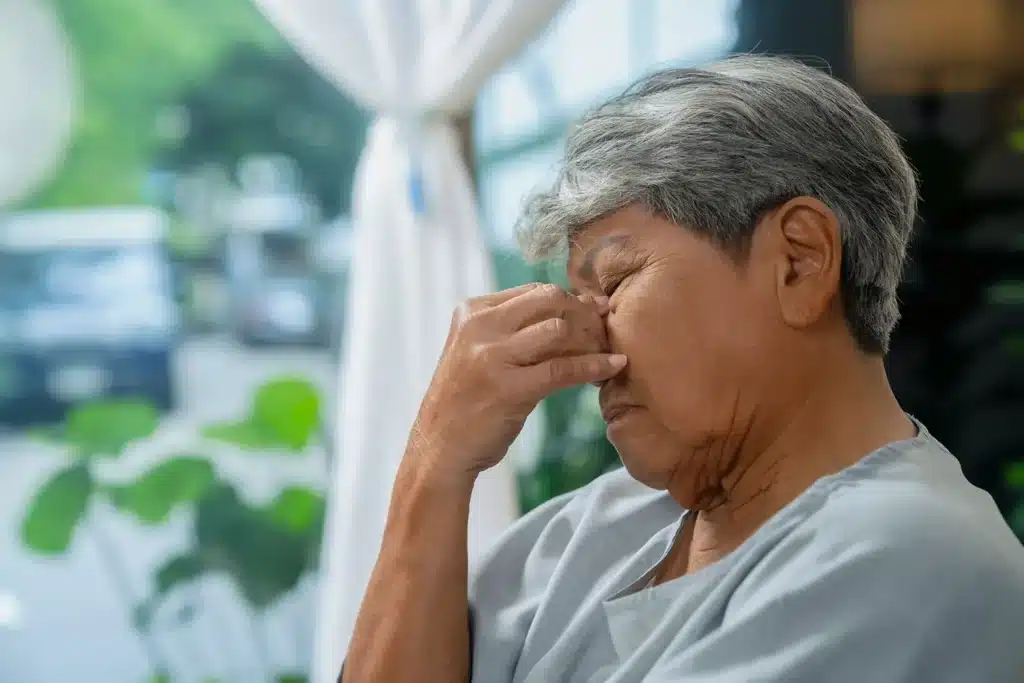
- Blurred vision when looking at distant objects
- A constant need to strain or squint to see far objects clearly
- Headaches after long periods of reading or other visual activities
- Sitting closer than expected to the television, whiteboard, or screen
- Fatigue when driving, watching films, or following presentations
In children, myopia may go unnoticed for some time, as many children do not recognise that their distance vision is abnormal or are reluctant to raise it with parents or teachers.
Myopia in Singapore
Myopia in Singapore is among the most prevalent in the world. According to the Health Promotion Board, roughly 65 per cent of Primary 6 pupils are affected, with the figure rising to approximately 28 per cent even among Primary 1 pupils.
The high prevalence is attributed to a combination of genetic predisposition in East Asian populations, intensive near-work demands from an early age, and historically low levels of outdoor time among school-going children.
Childhood Myopia: What Parents Should Look For
Childhood myopia refers to the onset and progressive worsening of myopia during the school-age years. It is particularly important to detect and manage early, as myopia that begins in childhood tends to progress more rapidly, and children who reach high myopia (above 600 degrees) face a greater lifetime risk of serious eye complications.
Your child may not tell you their vision has changed. Many children do not realise their distance sight is abnormal, or are reluctant to raise it at school. Watch for the following at home:
- Squinting when watching television or reading a whiteboard
- Holding books, tablets, or phones unusually close
- Complaints of headaches or eye fatigue after schoolwork
- Losing interest in sports or activities that involve tracking objects at a distance
Book an assessment with an ophthalmologist (eye specialist) if your child’s prescription rises by more than 100 degrees in a year, if myopia is detected before the age of eight, or if you have a family history of high myopia.
Why High Myopia Needs Treating
When myopia progresses beyond 600 degrees, the eyeball becomes longer than normal. This condition, known as pathological myopia (where the eyeball elongates excessively and causes structural changes to the eye), carries risks that go beyond blurred vision.
The physical elongation stretches and thins the tissues at the back of the eye, including the retina and the macula. This structural change is irreversible: corrective surgery can restore clear vision, but it cannot shorten the axial length of the eyeball or reduce the underlying risk that comes with it.
Managing myopia early, particularly in children, aims to limit how far the prescription progresses and reduce lifetime risk.
Retinal Detachment in High Myopia
A longer eyeball places greater mechanical tension on the retina. This can cause the retina to develop small holes or tears, through which fluid from inside the eye may pass, gradually lifting the retina away from the underlying tissue. This is known as retinal detachment.
According to the Singapore National Eye Centre, high myopia is a significant risk factor for retinal detachment and other sight-threatening complications, including myopic macular degeneration, cataracts and glaucoma. If you experience a sudden increase in floaters, flashes of light, or a shadow or curtain appearing across part of your vision, seek urgent assessment.
How Retinal Detachment Is Treated
Retinal detachment is a same-day ophthalmic emergency. At Asia Pacific Eye Centre, our specialists manage retinal detachment promptly, with treatment options including laser retinopexy (to seal retinal holes or tears before detachment occurs), scleral buckle surgery, and vitrectomy (surgical removal and replacement of the vitreous gel inside the eye).
The sooner treatment is received, the better the outlook for your vision.
Myopic Macular Degeneration
Early Cataract and Glaucoma
High myopia is associated with an earlier onset of cataracts (clouding of the natural lens of the eye) and a higher risk of glaucoma (progressive damage to the optic nerve, often linked to raised pressure in the eye). Regular monitoring is important for anyone with myopia above 600 degrees, even if your corrected vision currently feels normal.
How Myopia Is Diagnosed and Monitored
If your child’s vision has not been checked recently, an optometrist (a specialist in testing eyesight and prescribing corrective lenses) can perform an initial screening. For axial length measurement, cycloplegic refraction and retinal examination, you will need to see an ophthalmologist (a medical eye specialist).
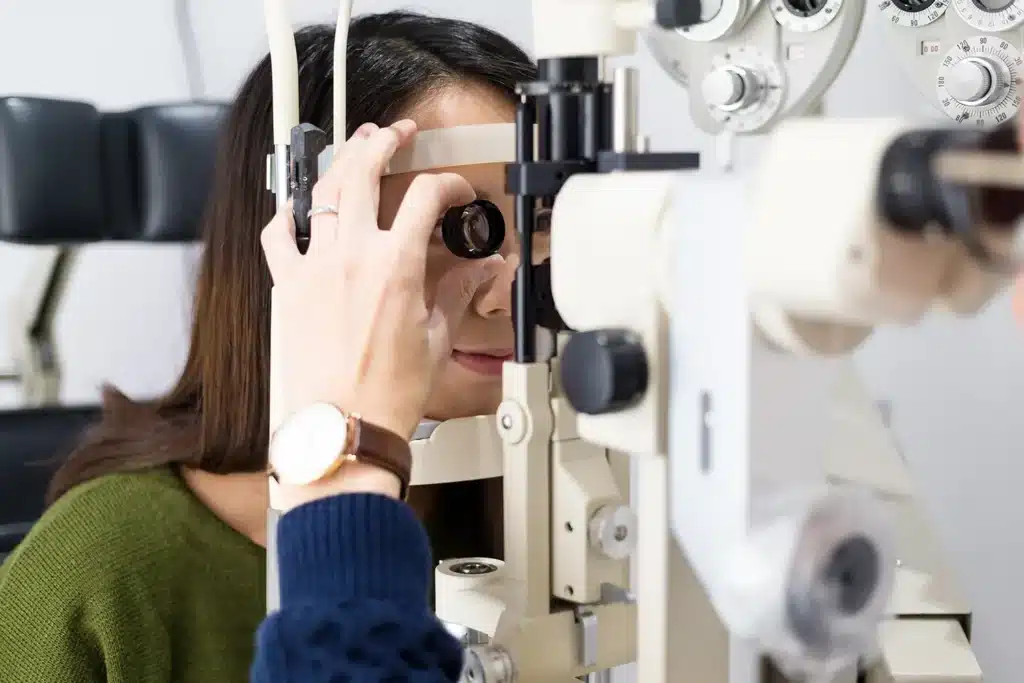
- Visual acuity testing: reading a chart at a standard distance to measure how well you currently see
- Refraction: determining the lens prescription that gives your best corrected vision
- Cycloplegic refraction (children): eye drops that temporarily relax the focusing muscles, giving a more accurate prescription reading in children who can otherwise compensate
- Axial length measurement: ultrasound or optical measurement of the physical length of the eyeball, used to track progression over time
- Retinal examination: dilated examination of the retina to check for any thinning, tears, or other changes associated with myopia progression
For children on myopia control treatment, follow-up assessments are typically scheduled every three to six months to monitor axial length and adjust treatment if progression continues.
Myopia Control Treatments in Singapore
Myopia control is a widely requested myopia treatment in Singapore, aiming to slow the rate at which your child’s prescription increases. It does not restore vision that has already been lost, but it may reduce how myopic your child becomes by the time their eyes stabilise in adulthood.
Treatment is selected based on your child’s age, current degree of myopia, rate of progression, and lifestyle. Our team offers the full range of myopia control options available in Singapore.
Low-Dose Atropine Eye Drops
Low-dose atropine (typically at a 0.01% concentration) is applied as a nightly eye drop to slow the elongation of the eyeball.
Clinical studies conducted in Singapore, including the Atropine Treatment of Myopia (ATOM) trials at the Singapore Eye Research Institute, found that low-dose atropine meaningfully reduced myopia progression in treated children compared to controls, with minimal side effects at lower concentrations.
Some children experience mild light sensitivity or temporary difficulty with close focusing, which usually settles as the eyes adjust.
Orthokeratology (Ortho-K)
Orthokeratology (Ortho-K) involves wearing specially designed rigid contact lenses overnight. The lenses gently reshape the cornea (the clear front surface of the eye) during sleep, providing clear vision throughout the day without glasses or contact lenses.
Studies suggest Ortho-K may also slow myopia progression by altering the way peripheral light is focused on the retina. Lens hygiene is critical, as improper care carries a risk of eye infection.
Myopia Control Spectacle Lenses
Peripheral defocus spectacle lenses are designed to reduce the optical signal that drives eyeball elongation, while still providing clear central vision. They are a suitable option for children who are not ready for contact lens wear. Several lens designs shown to slow progression in clinical trials are available at Asia Pacific Eye Centre.
Soft Multifocal and Daily Disposable Contact Lenses
For older children and teenagers who are active in sport or prefer not to wear spectacles, soft multifocal or daily disposable lenses designed for myopia control offer a wearable alternative to Ortho-K. Daily disposables in particular reduce the hygiene demands associated with reusable lenses.
Combination Therapy
In some cases, two treatments are used together, for example low-dose atropine alongside Ortho-K, where progression is rapid or where a single treatment has not achieved adequate control. Combination therapy is reviewed at each follow-up appointment based on axial length measurements.
Lifestyle Habits That Support Myopia Control
Myopia control treatments work best when supported by consistent daily habits. These habits do not replace clinical treatment but may reduce the environmental load on your child’s growing eyes.
Spending Time Outdoors
Children who spend more time in natural daylight each day have a lower risk of myopia onset. For children who are already myopic, outdoor time may help slow further progression alongside formal treatment.
The 20-20-20 Rule
During sustained near work, encourage a short visual break every 20 minutes: look at something at least 20 feet (roughly six metres) away for at least 20 seconds. It takes less than half a minute and gives the focusing muscles inside the eye a chance to relax.
Myopia Correction for Adults
If your myopia has stabilised, eye surgery for myopia is one of several options available to correct your vision and reduce or eliminate your dependence on glasses and contact lenses.
It is worth knowing that corrective treatments, whether glasses, contact lenses or surgery, restore clear vision but do not reverse the physical elongation of the eyeball. If you have high myopia, regular retinal monitoring remains important even after successful correction.
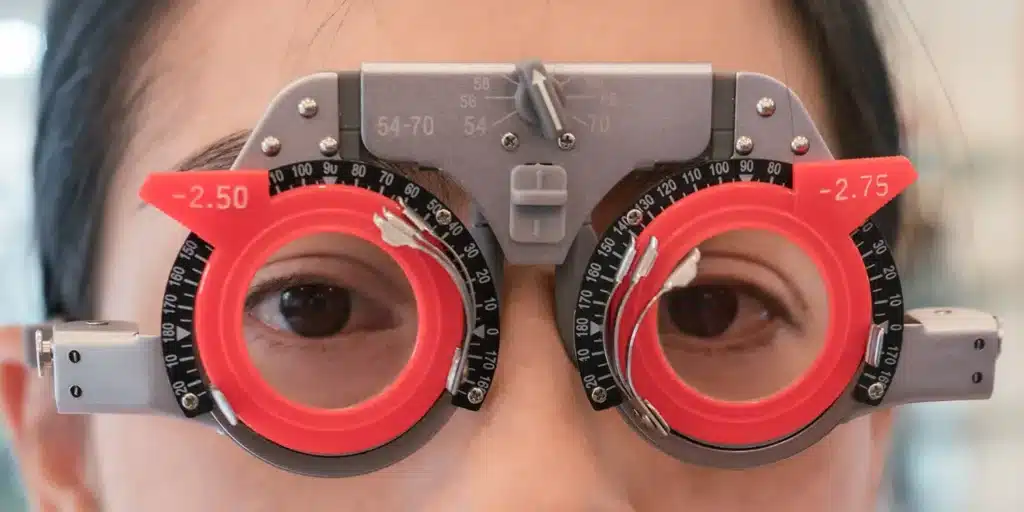
Glasses and Contact Lenses
Glasses and contact lenses provide clear vision by compensating for the eye's refractive error. They are effective, reversible and suitable for all degrees of myopia, but they do not slow progression in adults and must be updated as prescriptions change.
LASIK and Laser Eye Surgery for Myopia
LASIK is a widely used form of laser eye surgery for myopia, using a laser to permanently reshape the cornea (the clear front surface of the eye), correcting your refractive error and reducing or, in many cases, eliminating the need for glasses or contact lenses.
Suitability depends on your degree of myopia, corneal thickness and overall eye health, all of which are assessed before any procedure is recommended. Many patients may achieve functional unaided vision within 24 to 48 hours, though individual recovery varies, with full stabilisation over several weeks.
Implantable Contact Lenses (ICL)
Implantable Contact Lenses (ICL) are a surgical option if your myopia is beyond the range suitable for LASIK, or if your corneas are too thin to safely undergo laser reshaping. A small lens is implanted inside the eye in front of the natural lens, correcting your refractive error without altering the corneal surface.
ICL is removable, which some patients consider an advantage over permanent corneal procedures.
Cataract Surgery and Refractive Lens Exchange
Cataract surgery involves removing the natural lens of the eye and replacing it with an artificial intraocular lens (IOL) selected to correct your refractive error. If you have high myopia and are not suitable for LASIK or ICL, or if your natural lens is already beginning to cloud, this may be the most appropriate correction option for you.
Which Correction Option Suits Your Degree?
The right option depends on a full assessment of your prescription, corneal measurements, age and overall eye health.
As a general guide, laser procedures are typically considered for lower to moderate degrees of myopia with adequate corneal thickness, while ICL is assessed for higher degrees or thinner corneas, and lens replacement for older patients or those with early cataract formation.
Only a clinical evaluation can determine what is right for your eyes.
Our Eye Specialists
Medically reviewed by the clinical team at Asia Pacific Eye Centre. Last reviewed: September 2026.
Asia Pacific Eye Centre’s myopia services are led by a team of four fellowship-trained ophthalmologists based at Gleneagles Hospital, who have practised for a combined total of over 40 years.


Frequently Asked Questions
Why is myopia in Singapore so common?
Singapore has one of the highest rates of myopia in the world. Roughly 65 per cent of Primary 6 pupils here are myopic. The reasons are a combination of genetic predisposition in East Asian populations, intensive near-work demands from early schooling, and historically limited outdoor time among children.
Singapore has been a significant centre for myopia research precisely because of this prevalence, and myopia control in Singapore has benefited directly from locally conducted clinical trials, including the ATOM studies into low-dose atropine carried out at the Singapore Eye Research Institute.
Can myopia be cured or reversed?
No. The physical elongation of the eyeball that causes myopia is irreversible. Myopia control treatments in children aim to slow how quickly the prescription increases, while corrective options such as LASIK, ICL and lens surgery restore clear vision in adults. Neither approach returns the eye to its original length or eliminates the structural risks associated with high myopia.
Do myopia control treatments actually work?
Yes, for several treatments the evidence is reasonably strong. Clinical trials of low-dose atropine, including the ATOM studies conducted in Singapore, have found meaningful reductions in the rate of progression compared to placebo, and orthokeratology has shown consistent slowing of axial elongation across multiple studies.
Results vary between individuals, and progression is tracked through axial length measurements at each follow-up rather than prescription changes alone.
How much does myopia control cost in Singapore?
Costs vary depending on the treatment selected. Low-dose atropine, Ortho-K and myopia control spectacle lenses each carry different price points.
A consultation at Asia Pacific Eye Centre will include a full assessment and a written treatment recommendation with associated costs. Contact the clinic directly for current pricing.
At what age should myopia control start?
Myopia control is generally recommended as soon as myopia is detected in your child, as progression tends to be fastest during the primary school years. Early intervention gives the greatest opportunity to limit the final degree of myopia reached by the time the prescription stabilises.
At what age does myopia stop progressing?
For most people, myopia stabilises in their early twenties. However, children who develop myopia at a young age are at higher risk of reaching high myopia (above 600 degrees) by adulthood, as their prescription has more years in which to progress. In some adults with heavy near-work demands, mild progression can continue beyond their twenties.
Can I have LASIK eye surgery for myopia if I have high myopia?
LASIK eye surgery for myopia is assessed on a case-by-case basis. Suitability depends on your degree of myopia, your corneal thickness, and the shape of your cornea.
If your myopia exceeds what laser correction can safely address, or if your corneal thickness is insufficient, ICL is typically the preferred surgical option. A pre-operative assessment will determine which procedure, if any, is right for your eyes.
Is myopia inherited from the mother or the father?
Either parent can pass on a predisposition to myopia. According to the Singapore National Eye Centre, having one myopic parent roughly doubles your risk of developing myopia, while having both parents myopic increases the risk approximately eight-fold. The risk increases further with higher degrees of parental myopia.
Book a Myopia Assessment at Asia Pacific Eye Centre
A myopia assessment at our Gleneagles Hospital clinic includes a full refraction, axial length measurement and retinal examination. Following your assessment, you will receive a clear degree reading and a written treatment recommendation tailored to your eye health.
To book, call +65 6470 3366, WhatsApp +65 9235 7063, or use our online appointment form.